
Male fertility · Delhi
Male infertility deserves complete, respectful evaluation
A male factor may contribute alone or alongside female factors. Early joint assessment can reduce delay, identify health concerns and support a more appropriate fertility plan.
- Individual assessment
- Clear explanations
- Confidential support
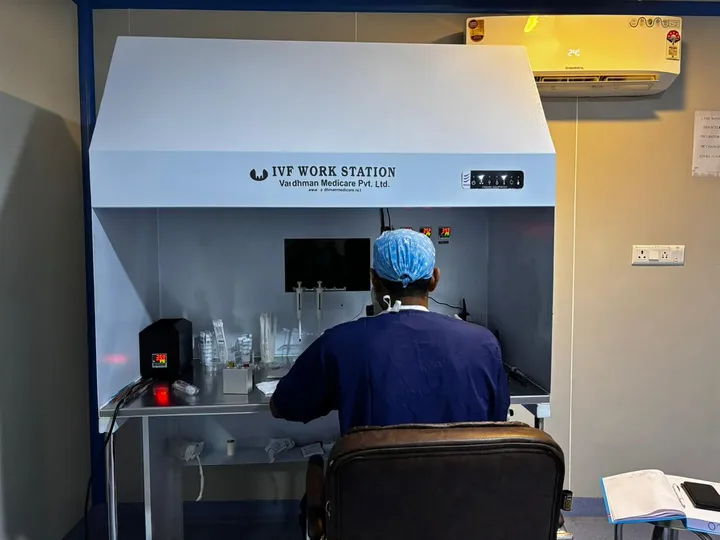
Understanding male infertility care
More than a single semen-analysis number
Semen analysis commonly reports volume, sperm concentration, movement and morphology. Results can vary between samples because of illness, abstinence interval, medicines, collection conditions and natural variation. An unexpected result may need to be repeated under appropriate instructions before conclusions are drawn.
Male infertility can relate to testicular function, hormone conditions, obstruction, varicocele, infection, ejaculation difficulties, medicines, heat exposure, tobacco, alcohol, metabolic health, genetic factors or an unexplained cause. A detailed history and examination can identify questions that laboratory numbers alone cannot answer.
Treatment should match the cause and the couple’s combined reproductive situation. Options may include health changes, medical or surgical care, timed intercourse, IUI, IVF, ICSI or surgical sperm retrieval. Taking supplements without evaluation may delay useful care or interact with other conditions.
When it may be discussed
When male fertility assessment is useful
Both partners can begin evaluation together. Male assessment is especially important before choosing an assisted-reproduction method.
- 01
A couple has tried to conceive without success for the recommended interval based on age and clinical circumstances.
- 02
A prior semen analysis showed low count, reduced movement, unusual morphology or no sperm in the sample.
- 03
There is a history of undescended testes, groin surgery, genital injury, cancer treatment, infection or sexual-function difficulty.
- 04
There are symptoms or health conditions involving hormones, diabetes, obesity or medicines that may affect fertility.
- 05
IUI, IVF or ICSI is being considered and the sperm strategy needs to be based on current findings.
A step-by-step view
A structured male fertility evaluation
The aim is to understand reproductive potential and wider health—not to place blame.
- 01
History
The consultation reviews fertility duration, prior pregnancies, sexual health, operations, infections, medicines, lifestyle and occupational exposures.
- 02
Semen analysis
A sample is collected under standard instructions and assessed; repeat testing may be needed because results vary.
- 03
Clinical review
Examination by an appropriate specialist can identify testicular, ductal, varicocele or hormonal clues.
- 04
Targeted testing
Hormone tests, ultrasound, urine testing or genetic counselling may be advised when findings create a specific indication.
- 05
Combined assessment
Male and female findings are considered together with age, time trying and treatment preferences.
- 06
Individual plan
The team explains treatable factors, realistic options, assisted-reproduction choices and when another specialist is needed.
Questions worth asking
Questions to bring to the consultation
- Does the semen test need repeating, and under what collection instructions?
- Could a medicine, medical condition or exposure be affecting the result?
- Is an andrology, urology, endocrine or genetic opinion appropriate?
- Would treatment of a cause change natural conception or assisted-reproduction options?
- Why is IUI, IVF, ICSI or surgical sperm retrieval being suggested?
- How will both partners’ findings and time considerations shape the plan?
Realistic expectations
A low result is not a verdict—and a normal result is not the whole answer
Semen values do not divide people neatly into fertile or infertile. Conception can occur with results outside reference ranges, while a result within range does not exclude every sperm-function or couple-level fertility issue.
Some causes can be treated or improved; others may require assisted reproduction. Changes in sperm production take time, so advice about follow-up testing should be realistic. Avoid claims that one supplement or lifestyle change can ensure fertility.
Severe sperm reduction or absence may justify genetic counselling before treatment. This can inform health decisions and responsible reproductive planning without making assumptions about outcome.
Continue reading: ICSI treatment →Common questions
male infertility care FAQs
General answers can help you prepare, but individual advice requires a medical consultation.
Should a semen analysis be repeated?
Often, yes, when an initial result is unexpected or abnormal. Timing, fever, collection conditions and natural variability can affect findings. Your clinician should advise the interval and preparation.
Can stress cause male infertility?
Stress may affect sexual function, wellbeing and behaviour, but an abnormal result should not be attributed to stress without evaluation. Medical, anatomical, hormonal, genetic and lifestyle factors may need review.
Does male infertility always require ICSI?
No. The plan depends on the type and severity of findings, female-partner factors, age, duration and prior treatment. Options can range from treating an underlying condition to IUI, conventional IVF, ICSI or retrieval procedures.
Can supplements improve sperm quality?
Evidence and product quality vary, and supplements are not risk-free. A clinician should review diet, medicines, deficiencies and health before recommending anything, especially because self-treatment can delay investigation.
A calm first step
Discuss what may be appropriate for you.
Share only the details needed for a callback. The first fertility counsellor conversation is free and is not a medical diagnosis.
Private & secure enquiry
Ask about male infertility care
Our care team can help you request a confidential fertility counsellor call in Delhi.
Thank you — your request has been received.
Our counsellor team will contact you. If you prefer, you can continue privately on WhatsApp now.
Continue on WhatsApp