
Embryo freezing · Delhi
Embryo freezing with careful consent and planning
Embryo cryopreservation uses vitrification to store suitable embryos created through IVF or ICSI. Future use requires clinical review, valid consent and compliance with Indian ART law.
- Individual assessment
- Clear explanations
- Confidential support
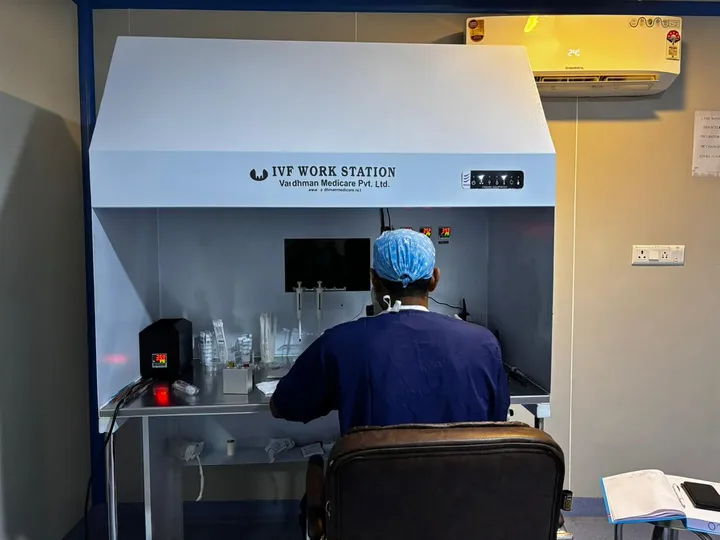
Understanding embryo freezing
Why embryos may be frozen during IVF
After fertilisation, embryologists observe development and assess whether embryos are suitable for transfer or freezing. Vitrification cools embryos rapidly to limit ice-crystal formation, allowing suitable embryos to be stored for a possible frozen embryo transfer at a later time.
A freeze-all plan may be considered when the uterine lining, hormone pattern, risk of ovarian hyperstimulation, genetic-testing pathway or another clinical factor makes a later transfer more appropriate. Additional suitable embryos may also be frozen after a transfer so another ovarian-stimulation cycle may not be needed before a future attempt.
Freezing does not improve every embryo or ensure survival after warming. Decisions about which embryos to freeze, the day of freezing, storage duration and later use should be explained in plain language and recorded through legally appropriate consent from the people whose reproductive material is involved.
When it may be discussed
When embryo freezing may be part of a plan
Embryo freezing follows fertilisation, so it involves decisions that differ from freezing unfertilised eggs or sperm.
- 01
Suitable additional embryos remain after an embryo transfer and the couple consents to storage for possible future use.
- 02
A fresh transfer is postponed because of ovarian-hyperstimulation risk, progesterone timing, uterine-lining concerns or another medical reason.
- 03
Embryos are biopsied for medically indicated genetic testing and remain frozen while results are reviewed.
- 04
Fertility preservation is planned before medical treatment, where creating and storing embryos is appropriate for the eligible couple.
- 05
A future sibling attempt is being considered using embryos stored from an earlier IVF cycle, subject to renewed clinical review and valid consent.
A step-by-step view
From IVF laboratory to frozen transfer
Embryo freezing is one stage in a wider clinical, laboratory, consent and storage pathway.
- 01
IVF or ICSI
Eggs are retrieved and fertilised using the method selected for the treatment plan.
- 02
Embryo culture
The embryology team observes development under controlled conditions and records relevant findings.
- 03
Suitability review
Embryos are assessed using the clinic’s documented criteria; not every embryo will be suitable for freezing.
- 04
Vitrification
Suitable embryos are cryopreserved, carefully labelled and linked to witnessing and traceability records.
- 05
Storage
Embryos are maintained in monitored cryogenic storage under valid consent and applicable legal requirements.
- 06
Frozen embryo transfer
When future use is planned, the uterus is prepared, an embryo is warmed and transfer is considered if it remains suitable.
Questions worth asking
What to clarify about embryo storage
- Which embryos are considered suitable for freezing and how that assessment is explained.
- How identity, witnessing, labelling, monitoring and backup procedures work.
- Whose consent is required for storage, continued storage, use, transfer or disposal.
- What happens if contact details, relationship status or medical circumstances change.
- What storage and frozen-transfer fees may apply now and later.
- What the warming-survival and transfer discussion means for the particular embryos stored.
Realistic expectations
A frozen embryo remains a possibility, not a guaranteed outcome
Many suitable embryos tolerate vitrification and warming, but survival is not assured. An embryo that survives warming still needs to implant and develop, and outcome depends on embryo, uterine and broader clinical factors.
The number of stored embryos should be interpreted alongside their stage, laboratory assessment, age of the egg provider at retrieval and treatment history. These details provide context but still cannot guarantee pregnancy or live birth.
Consent and communication are ongoing responsibilities. Couples should read storage documents, keep contact information current and seek updated advice before planning a transfer.
Continue reading: IVF treatment →Common questions
embryo freezing FAQs
General answers can help you prepare, but individual advice requires a medical consultation.
Is a frozen embryo transfer less effective than a fresh transfer?
Neither approach is automatically better for every person. The embryo, uterine preparation, age at egg retrieval, diagnosis and reason for freezing all matter. Your specialist should explain why fresh or frozen transfer is proposed.
Does every IVF embryo get frozen?
No. Some embryos stop developing or do not meet the laboratory’s criteria for transfer or cryopreservation. The embryology team should explain the assessment and provide an appropriate cycle summary.
Can stored embryos be used without both partners’ consent?
Embryo use and storage are governed by consent and applicable Indian ART law. The clinic should verify current legal requirements and valid consent before any use or change in storage status.
What happens before a frozen embryo transfer?
The uterine lining is prepared through a natural or medication-supported plan, timing is monitored, the embryo is warmed and its suitability is reviewed before transfer.
A calm first step
Discuss what may be appropriate for you.
Share only the details needed for a callback. The first fertility counsellor conversation is free and is not a medical diagnosis.
Private & secure enquiry
Ask about embryo freezing
Our care team can help you request a confidential fertility counsellor call in Delhi.
Thank you — your request has been received.
Our counsellor team will contact you. If you prefer, you can continue privately on WhatsApp now.
Continue on WhatsApp