
IVF treatment · Delhi
IVF treatment, explained with clarity and care
In vitro fertilisation brings eggs and sperm together in an embryology laboratory. Whether it is appropriate depends on both partners’ evaluation, treatment history and personal circumstances.
- Individual assessment
- Clear explanations
- Confidential support
Understanding IVF
What IVF involves—and why every plan differs
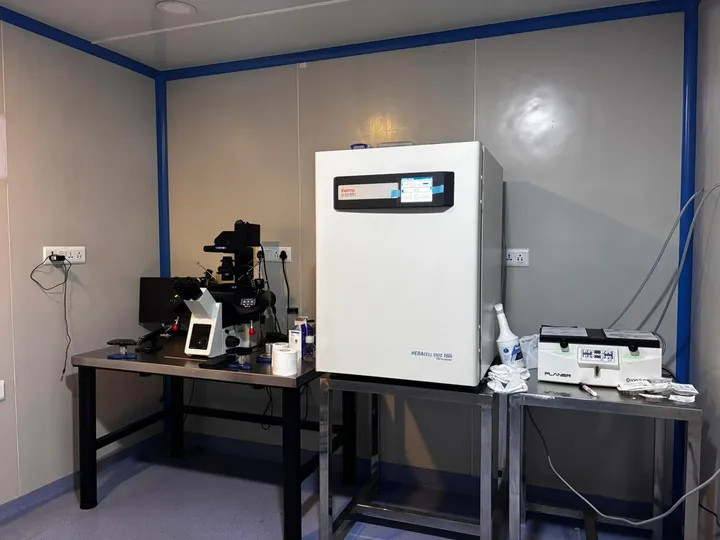
IVF is an assisted reproductive technology in which the ovaries are stimulated to develop multiple follicles, eggs are collected through a procedure, and fertilisation takes place in a controlled laboratory environment. One embryo may then be transferred to the uterus when clinically appropriate, while suitable additional embryos may be frozen with consent for possible later use.
The term “IVF cycle” can sound like one standard package, but protocols differ. Medicine doses, monitoring frequency, fertilisation method, embryo culture and transfer timing are selected after reviewing age, ovarian reserve, semen findings, uterine health, previous treatment and relevant medical conditions.
An initial consultation should create a clear problem list rather than rush toward a procedure. For some people a less intensive option may be reasonable; for others, IVF may provide a suitable route because of tubal factors, significant sperm concerns, reduced ovarian reserve, endometriosis, genetic indications or unsuccessful earlier treatment.
When it may be discussed
Situations in which IVF may be considered
These examples are not a checklist for self-diagnosis. The reason for treatment, age and complete evaluation matter when comparing IVF with other options.
- 01
Blocked or significantly damaged fallopian tubes that make natural fertilisation less likely.
- 02
Male-factor infertility where laboratory fertilisation, sometimes with ICSI, may be discussed after semen assessment.
- 03
Ovulation disorders, endometriosis or unexplained infertility when simpler approaches have not been suitable or successful.
- 04
Reduced ovarian reserve or increasing reproductive age where time and treatment strategy need careful consideration.
- 05
A medical indication for embryo testing, fertility preservation or use of previously frozen eggs or embryos.
A step-by-step view
A typical IVF journey
The sequence below is a general guide. Your specialist may change the protocol, timing or order for medical reasons.
- 01
Assessment and planning
Medical history, ultrasound, ovarian-reserve tests and semen findings help shape an individual protocol and consent discussion.
- 02
Ovarian stimulation
Hormonal medicines are used for several days to support the growth of multiple follicles rather than the single follicle often seen in a natural cycle.
- 03
Monitoring
Ultrasound and, when advised, blood tests help the clinical team review follicle development and adjust medicine or timing.
- 04
Egg retrieval
Eggs are collected through an ultrasound-guided procedure, usually with anaesthesia or sedation according to the clinical plan.
- 05
Fertilisation and culture
Eggs and prepared sperm are combined by conventional IVF or ICSI when indicated. Embryologists observe development under controlled conditions.
- 06
Transfer and follow-up
An embryo may be transferred in the same cycle or a later frozen cycle. A pregnancy test is scheduled after the advised interval.
Questions worth asking
What to clarify before an IVF cycle
- Why IVF is being recommended and whether reasonable alternatives exist.
- Which tests are needed for each partner before treatment begins.
- What the written estimate includes, including medicines, laboratory procedures and freezing.
- Whether conventional IVF, ICSI, fresh transfer or frozen transfer is being considered and why.
- How embryos are assessed, stored and handled with documented consent.
- What symptoms require urgent contact during stimulation or after egg retrieval.
Realistic expectations
IVF creates an opportunity, not a certainty
A cycle can have several points of uncertainty: follicle response, number of eggs retrieved, egg maturity, fertilisation, embryo development, transfer and implantation. Not every egg becomes an embryo, and not every embryo implants.
Age is important, especially the age of the egg provider, but no single factor or clinic-wide statistic predicts an individual outcome. Ask which outcome a number describes—pregnancy test, clinical pregnancy or live birth—and whether it is reported per cycle started, retrieval or transfer.
Emotional support, clear communication and a plan for different possible results are meaningful parts of responsible care. A specialist should explain benefits, limitations, risks and alternatives before consent.
Continue reading: IVF cost in Delhi →Common questions
IVF FAQs
General answers can help you prepare, but individual advice requires a medical consultation.
How long does one IVF cycle take?
The active stimulation and egg-retrieval phase often takes a few weeks, but total timing varies with pre-treatment evaluation, the protocol, cycle response and whether transfer happens fresh or after embryo freezing.
Is IVF always the first fertility treatment?
No. Depending on age, diagnosis, duration of infertility and test findings, timed intercourse, ovulation treatment, IUI, surgery or other care may be considered. IVF is recommended only when the individual balance supports it.
Does IVF require ICSI?
Not always. Conventional IVF and ICSI are different fertilisation methods. ICSI may be advised for particular sperm factors, prior fertilisation concerns or other clinical reasons; routine use should be discussed with the treating team.
Can IVF success be predicted online?
No online tool can predict pregnancy or live birth for an individual. Age, ovarian reserve, sperm findings, embryo development, uterine factors, medical history and treatment details all need clinical interpretation.
A calm first step
Discuss what may be appropriate for you.
Share only the details needed for a callback. The first fertility counsellor conversation is free and is not a medical diagnosis.
Private & secure enquiry
Ask about IVF
Our care team can help you request a confidential fertility counsellor call in Delhi.
Thank you — your request has been received.
Our counsellor team will contact you. If you prefer, you can continue privately on WhatsApp now.
Continue on WhatsApp